Corporate photography that doesn't look corporate
How to create corporate photography with genuine energy and personality. Avoid stiff poses and generic backgrounds. Real examples from commercial shoots.
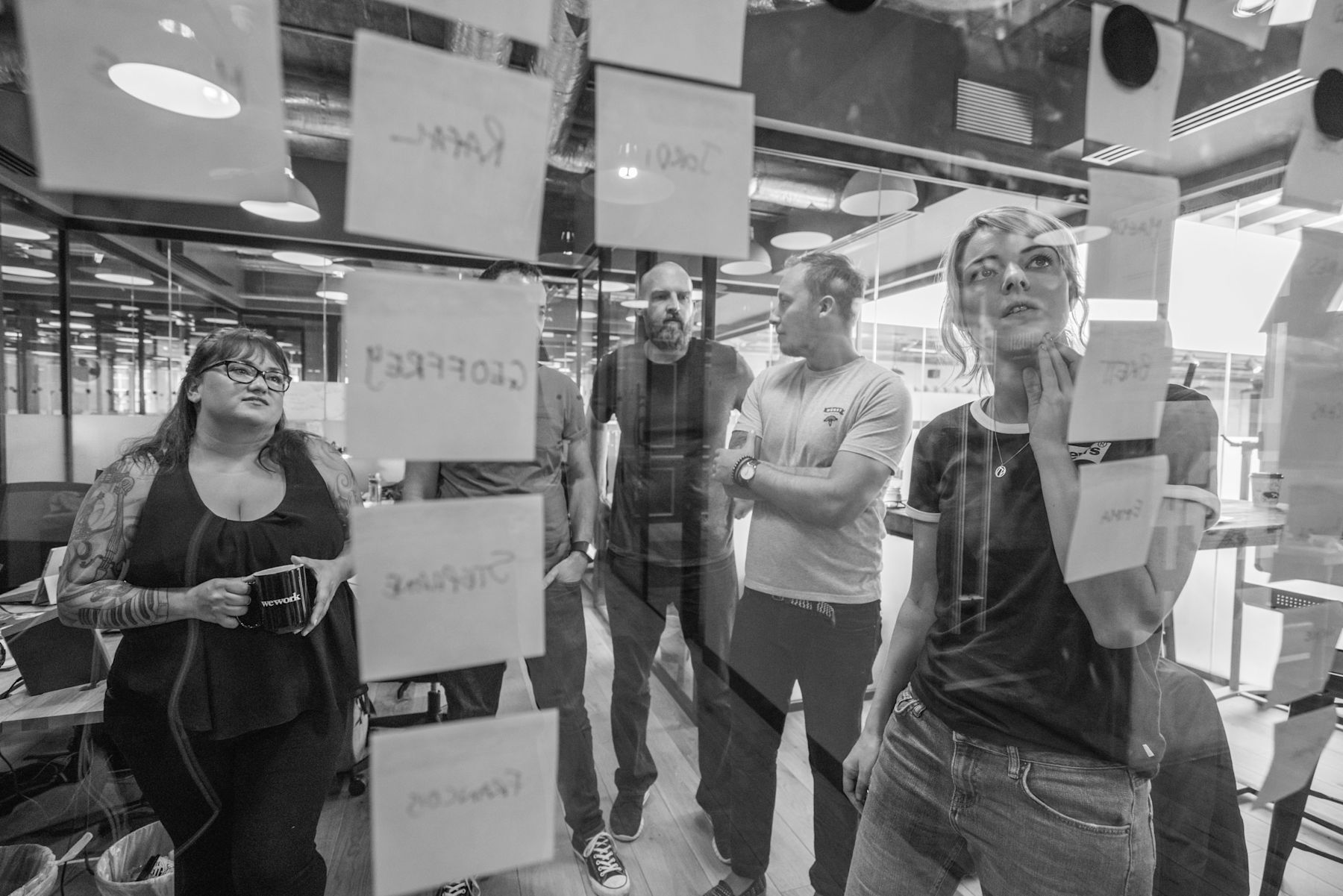
Corporate photography doesn't have to feel stiff or artificial. The best corporate work looks natural, energetic, and reflects what a company actually does, not just where it sits. It's about capturing people in their element rather than posing them in front of a branded backdrop.
I've shot corporate campaigns for companies like Team GB and Hawes & Curtis, and the difference between forgettable and effective photography always comes down to the same thing: whether the people in the shot look like they're genuinely doing something, or whether they look like they've been plucked out of their day and told to smile.
What makes corporate photography feel stiff in the first place?
Most corporate photography fails because it tries to be everything at once. You've got a shot list a mile long, a location that doesn't feel like work actually happens there, and people in clothes they wouldn't normally wear standing in positions no human being naturally adopts. That's the formula for generic stock photography.
Honestly, the biggest culprit is the background. A boardroom with a brick wall behind it or a perfectly lit studio backdrop signals "this is a photoshoot" immediately. Your brain recognises it's staged. Add in the fact that everyone's been told to stand up straight and smile at the camera, and you've got something that looks authentic to nobody.
I worked on a campaign for a software company a few years back where the initial brief was very much in that territory. Standard headshots, standard poses. We scrapped it and instead shot people actually working at their desks, having conversations, looking at screens. Not posed "we're pretending to look at a screen" shots. Actual work. The difference was night and day.
The other thing that kills corporate photography is over-retouching. I see a lot of corporate work where people look airbrushed into oblivion. That works for fashion or beauty, but for corporate? It creates distance. People look at it and think "that's not a real person". You want polish, sure, but you want authenticity more.
How do you shoot corporate photography that feels natural?
Shoot people doing real work in real environments. That's the core of it. Instead of a studio shoot with a timeline that's two hours and a shot list, I'll spend time on location where the company actually operates. That might be their office, a production floor, a client meeting, a site visit.
The key is giving people something to do rather than something to be. If you're photographing a team, have them work on an actual project rather than standing around a table pretending to collaborate. If you're shooting an executive, get them at their desk doing their job or walking between meetings. If you're photographing a workshop or manufacturing environment, shoot the process, not the people staring at the camera.
I shot a campaign for Alzheimer's Research UK where we documented researchers actually working in the lab rather than posing with beakers. The photos have energy because the work is real. People's faces change when they're focused on something genuine versus when they're aware of the camera.
Lighting matters too, but not in the way most corporate photographers think. You don't need studio-perfect lighting. In fact, that often reads as artificial. I work with available light as much as possible, supplementing with a reflector or a discreet light source to fill shadows. It keeps things feeling natural.
Another thing: give brief, loose direction rather than precise poses. Instead of "stand here with your hand on your chin", I might say "talk me through how this process works" and shoot while they're explaining. You get genuine expression, natural hand gestures, actual engagement.
Why does location matter so much for corporate photography?
Location tells half the story in corporate photography. A neutral background is forgettable. The actual environment where work happens is interesting and specific to that company.
When I'm scouting a location, I'm not looking for the most beautiful spot. I'm looking for what's authentic to that business. For a construction company, that's the site. For a law firm, it might be a meeting room or the archive. For a creative agency, it's their workspace. These locations have personality built in, and they immediately signal what the company does.
Using real environments also solves a practical problem: people relax more in spaces they know. If you're shooting in a studio or an unfamiliar location, there's anxiety. If you're shooting in their actual office, even with a camera crew present, they default to more natural behaviour faster.
I shot corporate photography for Melia Hotels where we worked across properties in different countries. The interiors and architectural details of the hotels were the backdrop, which meant the photography looked specific to the brand rather than generically corporate.
How do you balance brand guidelines with authentic photography?
Brand guidelines exist for a reason, but they don't have to mean stiff photography. The balance is shooting authentically first, then applying the guidelines in post-production or in your shot selection rather than forcing the guidelines into the shoot itself.
Most brand guidelines care about colour palette, logo placement, and overall tone rather than specific poses or expressions. So you can shoot naturally, and the guidelines filter through in the edit. If the brand is navy and gold, your colour correction emphasises that. If the brand is about movement and energy, you choose shots that have that dynamic quality.
What I'd avoid is planning a shot around a brand guideline before you've even shot. That's backwards. Shoot the genuine moment first, make sure you've got the energy and authenticity, then apply the brand filter.
I've found this works especially well when I'm producing both photography and video from a single production, which is something I specialise in. You get one crew, one visual language across assets, and you're not trying to force the same moment into both photo and film formats. Everything flows from the authentic shoot, and the brand consistency comes from the edit.
If you're planning a corporate photography shoot and you're not sure how to brief it so you get something that actually feels like your company rather than generic corporate stock, drop me a brief through the site and I'll put together an estimate and a creative approach for you.
Greg Woodward is a London-based commercial photographer and director. Since 2011, he's worked with brands across the UK and internationally to produce commercial and corporate photography that reflects what companies actually do, rather than what they think they should look like.
Frequently asked questions
- How much does corporate photography typically cost?
- Corporate photography pricing depends on shoot days, location, and deliverables. A half-day shoot in London typically ranges from £650 to £1,500 plus VAT depending on scope. Full-day shoots run £1,500 to £3,000 plus VAT. Get in touch with a brief for a custom quote.
- How many photos do I get from a corporate shoot?
- From a half-day corporate shoot, you'd typically receive 80 to 120 edited images. A full day produces 150 to 250 images. The exact number depends on the shoot's complexity and how many different scenarios or locations you're covering.
- How long does it take to get photos back after a corporate shoot?
- Editing timelines run 2 to 4 weeks depending on the volume and complexity. Rush turnarounds are available at additional cost if you need images quickly.
- Can you shoot corporate photography at our office?
- Yes. On-location shoots in your actual workspace are ideal for authentic corporate photography. They require minimal setup and people work more naturally in familiar environments.